Stepmother
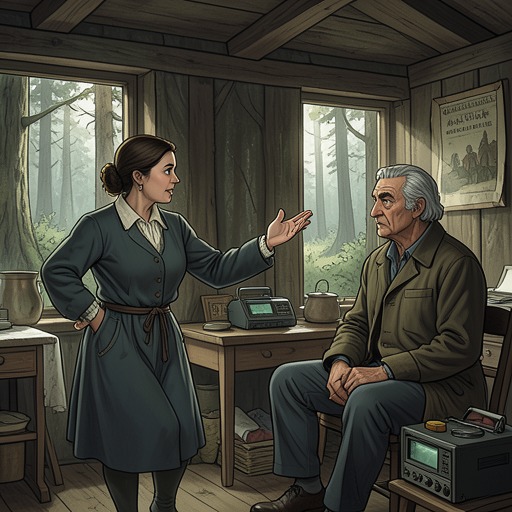
Hansel and GretelThe Stepmother, the Woodcutter’s second wife, twice persuades him to leave Hansel and Gretel deep in the forest during famine. She turns the household’s real scarcity into a plan that treats the children as expendable, then helps make their abandonment seem final: after Hansel’s first return, she blocks his access to the White Pebbles that had guided him home. Her actions set the story’s peril in motion, although the tale gives no account of what becomes of her after the second abandonment.
Identity and Household
The Stepmother enters the story after the children’s mother has died. She is married to the Woodcutter, who loves his children, while the family is so poor that a famine leaves them with almost nothing to eat. The narrative identifies her as wicked and makes her conduct the basis for that judgment: rather than seeking another way through the crisis, she proposes that the adults take the children into the forest and leave them there.
Her reasoning is starkly domestic. She says the four of them cannot survive another winter, and argues that abandoning the children is necessary to keep the remaining family alive. The Woodcutter initially refuses, knowing the children could starve or be devoured by wild animals. She presses the argument that all four will die if he does not agree, and eventually persuades him. The threat of hunger is genuine, but the choice to expose the children to still greater danger is hers to advocate and his to accept.
The First Abandonment
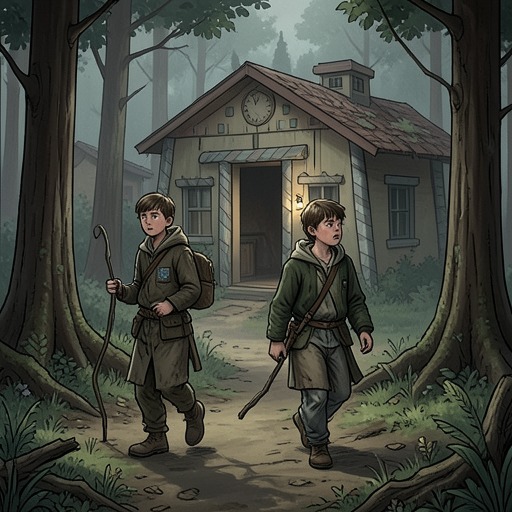
The Stepmother puts the first plan into action the following morning. She gets the children up early, gives each a piece of bread, and accompanies them and the Woodcutter into the forest. The adults take them to its deepest part under the pretext that they are going to work. There, beside a fire, they tell the children to wait until the work is finished and leave them behind.
The children have overheard the plan, and Hansel has secretly collected White Pebbles to mark the way home. As the family walks, he drops them one by one; after dark, their pale trail, lit by the moon, leads the children back. The Stepmother’s attempt to make the separation irreversible is also supported by deception. The children hear a repeated clapping sound and take it for the Woodcutter’s axe, but it comes from a branch she has tied to a tree so that the wind will move it. The false sound keeps the children waiting while the adults are gone.
The return exposes the failure of her scheme. The next morning Hansel and Gretel knock at their father’s door and announce that they have come back. The Stepmother is furious. The Woodcutter, by contrast, is overjoyed and regrets what he did. For a time, the four live together again, but the children’s safe return does not end the Stepmother’s effort to remove them.
The Second Abandonment
A few days later, a worse famine devastates the region. The Woodcutter does not want to lose his children again, yet the Stepmother once more persuades him that leaving them is the only solution. Hansel and Gretel hear their parents’ discussion for a second time. This time, however, the Stepmother has locked the door so Hansel cannot slip outside to gather more White Pebbles.
The next departure begins before sunrise. Each child again receives bread, and Hansel drops crumbs along the route as the family travels. The adults take the children deep into the forest and leave them beside a fire, as they did before. When the children try to return at dusk, they discover that the forest birds have eaten every crumb. The contrast between the two attempts is decisive: the White Pebbles endured as a visible route home, while the food Hansel uses on the second journey leaves no trace. The Stepmother’s locked door has helped remove the means of repeating his first escape, and the children are now lost.
Disappearance and Narrative Role
After the second abandonment, the narrative leaves the Stepmother behind. Hansel and Gretel wander through the dark forest, find the candy house, and are taken prisoner by the Witch; the Stepmother is not presented as part of that later encounter. The distinction matters: the story’s dangers shift from a household decision to the threat posed by a stranger in the forest, but the Stepmother’s actions have placed the children there.
When the children eventually return to the Woodcutter, he tells them that his wife has died and will never hurt them again. The story does not say when or how she died, so her death is reported rather than dramatized, and no connection between it and the children’s adventures is explained. Her ending nevertheless closes the domestic threat that sent them away. Across two episodes, she repeats the same basic proposal, while the children’s first successful return makes her second attempt more deliberate: she acts to keep Hansel from obtaining the stones that had defeated her plan. The tale therefore makes famine the circumstance of the conflict, but her repeated choice to abandon the children its immediate human cause.